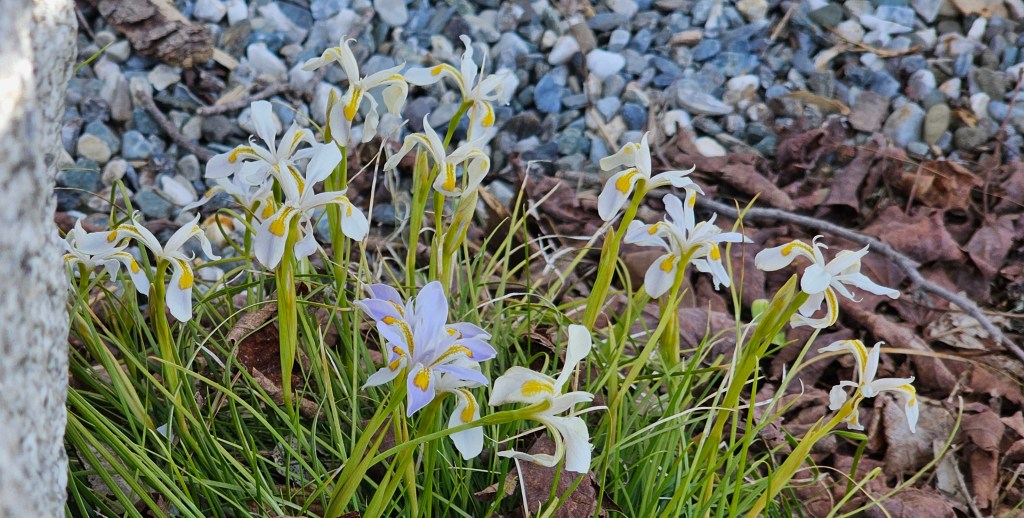
Our 2025 May joint meeting of the Berkshire Chapter NARGS and the New England Chapter Primrose Society at the Berkshire Botanic Garden was a great success! And one of the plants our vendors were selling was none other than Iris dabashanensis, a rarity and favorite of mine. It started blooming in my upper garden late April. And now bloom is just starting to open in the lower gardens. It prefers a little shade with drainage. It has always loved the east side of my house while sitting in a trough or raised crevice bed. Soil is easy too – gritty. Below you will see where it grows in nature so it makes perfect sense.
Turns out member Darrell Probst, who introduced it to cultivation here, was surprised that it was for sale at a Primula meeting. But our vendors did a fantastic job with wide ranging selections of primulas as well as other rare treasures. All our members were very interested to know more about this little iris. So we are pleased Darrell has shared some collection information about it. And we thank him for the added insight.
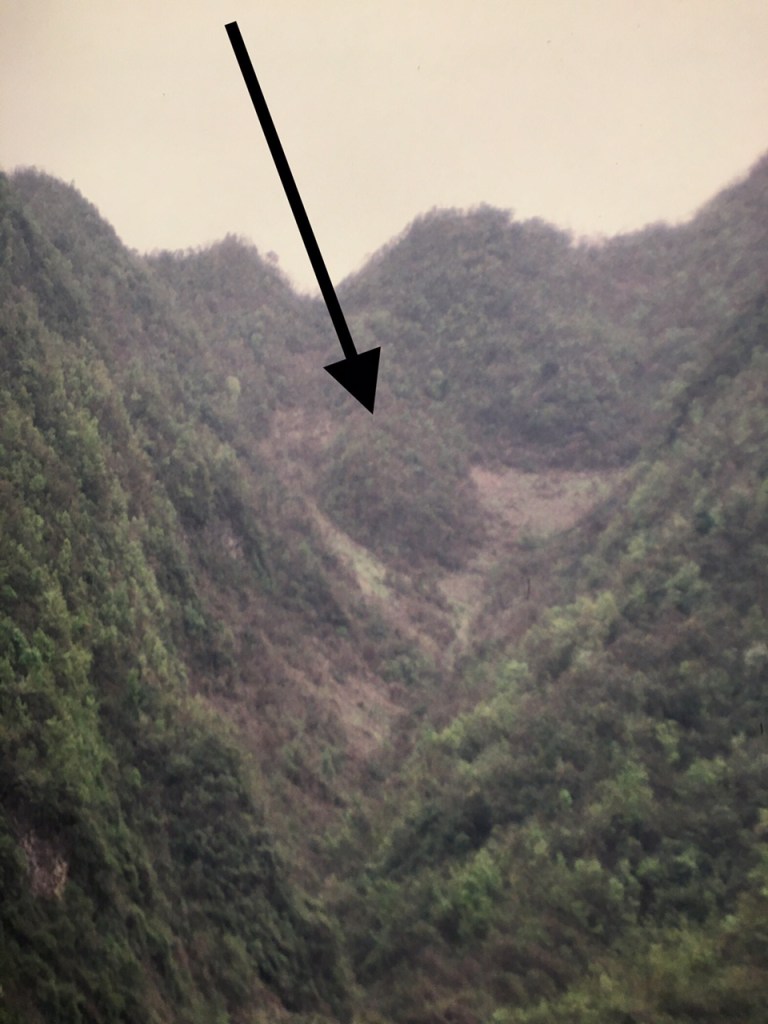
Darrell Probst- “It was actually 26 years ago today, on 3 May 2000 that I discovered it in bloom near the peak of the Daba mountains surrounding Wanyuan in the northeast corner of Sichuan Province, China. It was the most difficult climb of the trip, very steep up through rocky areas and slick clay. This was the first part down by the road which is at the bottom of the photo.
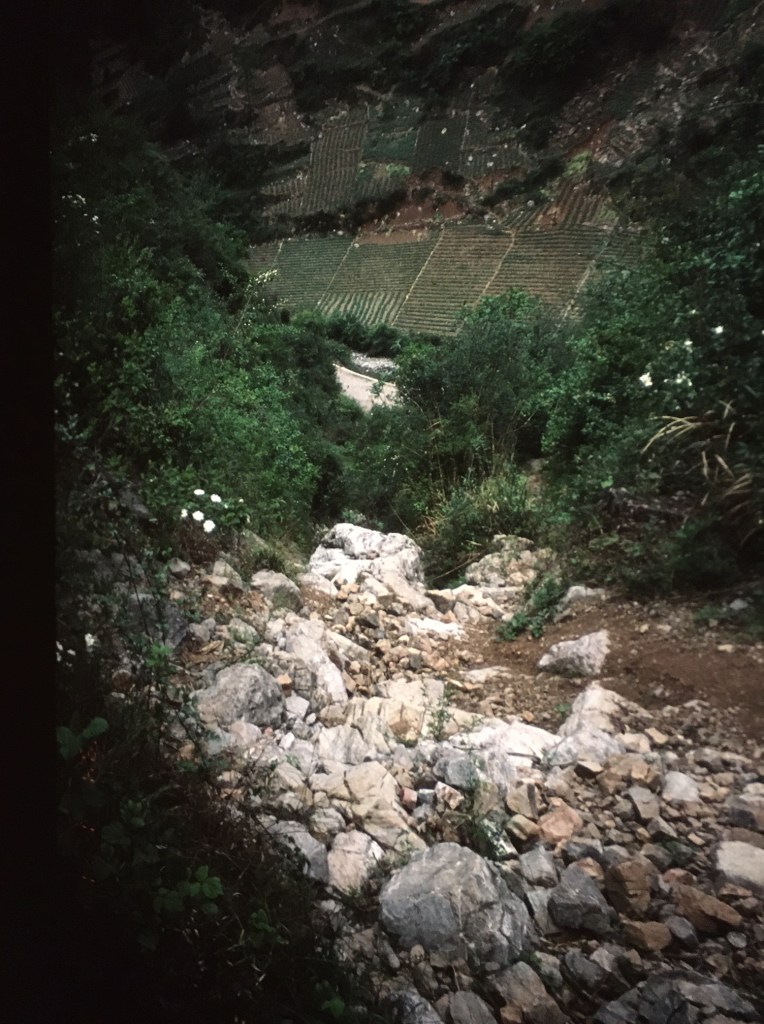
After a couple of hours climb we crossed over into a steep valley going up between two ridges.
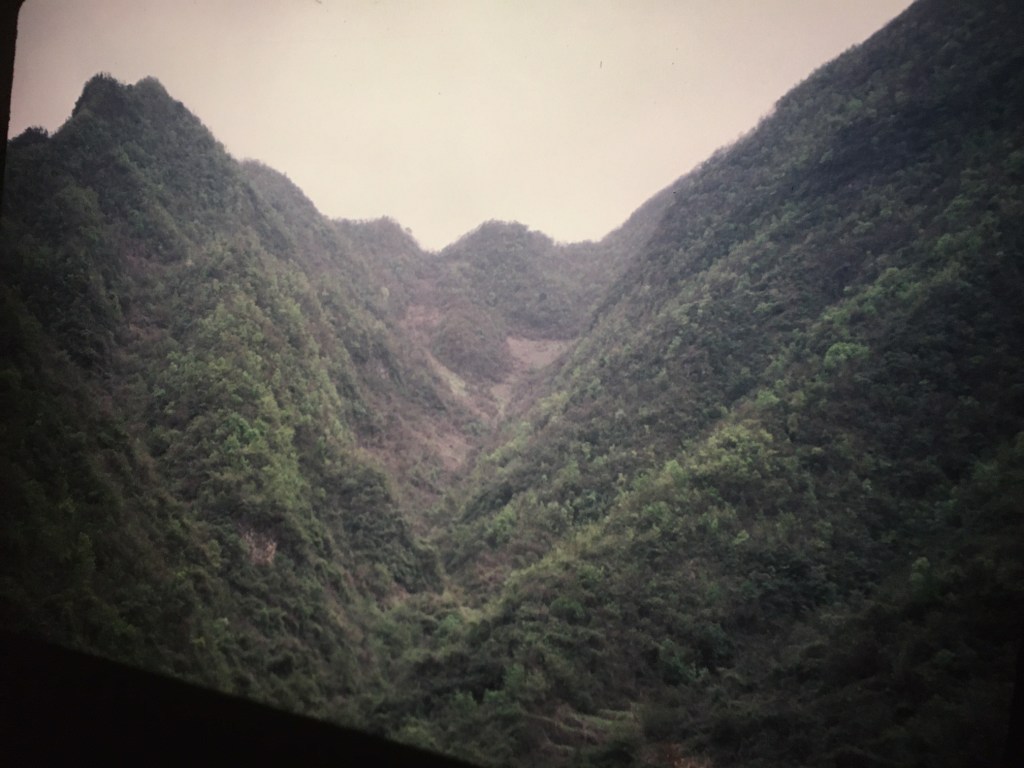
Near the top of the valley was a small knoll shown below. To the right of the knoll in the photo was a small patch of recently planted corn on the cultivated slope, so I went up along the left side of the knoll
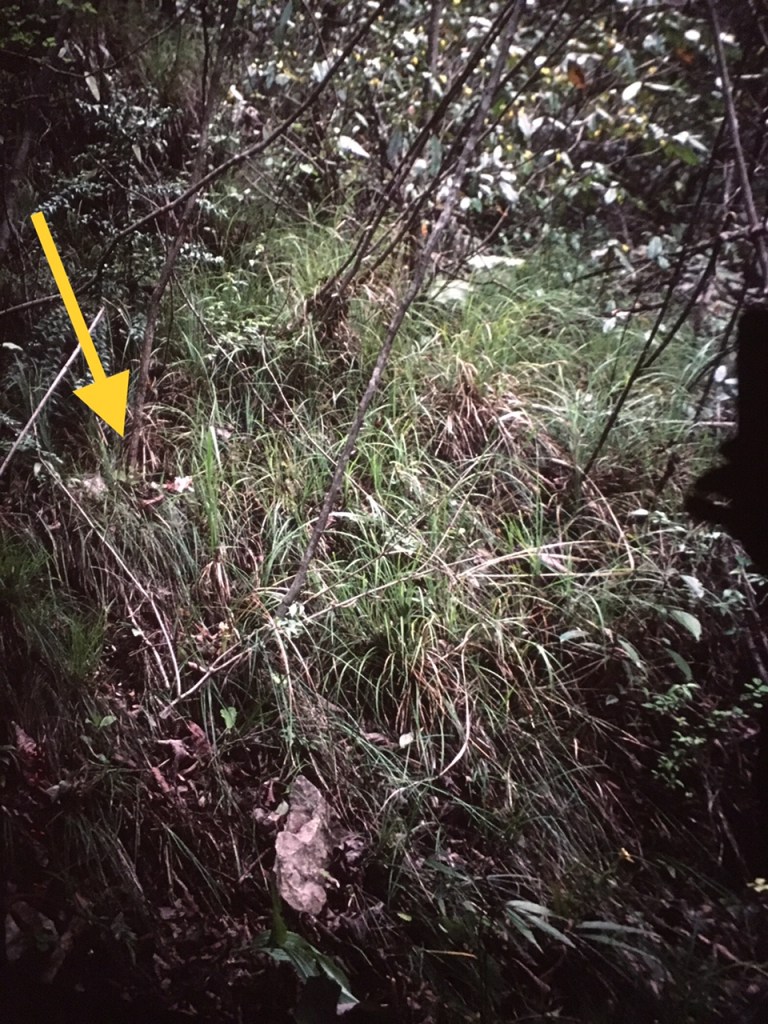
On the slope of that knoll I spotted what is now Iris dabashanensis in bloom. There are two flowers open below on either side of the point of the arrow. Most of the foliage in the photo is a species of Carex that the Iris intermingled with
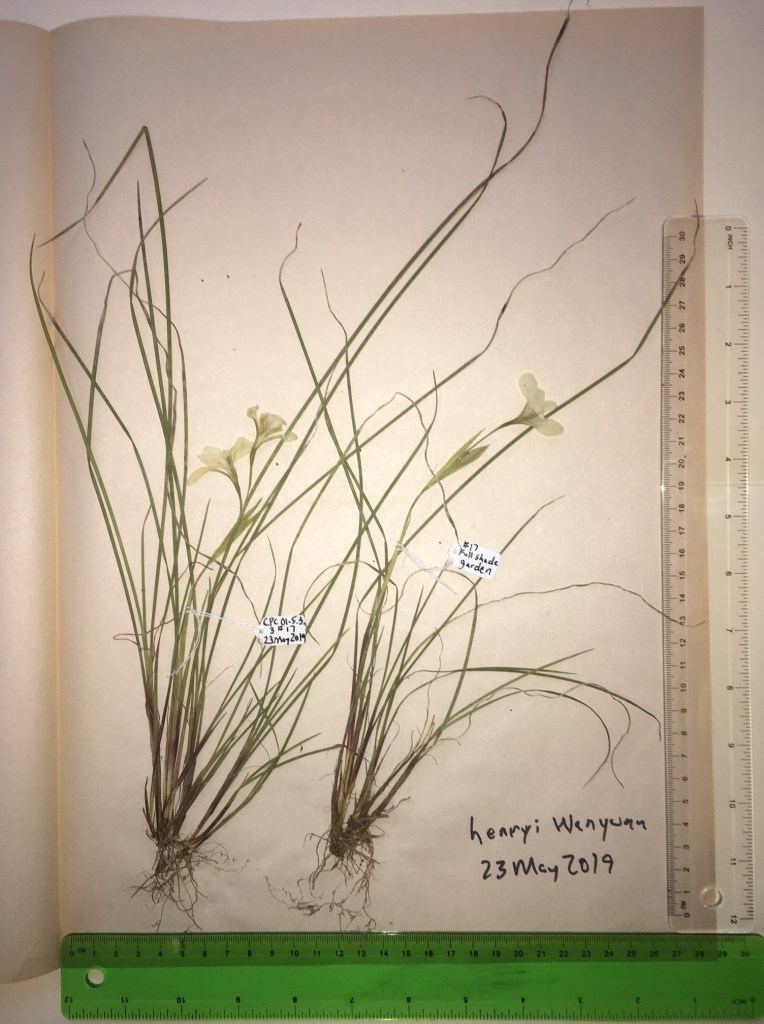
Below is one of the herbarium specimens I made of clone #17 that I sent out to Carol Wilson at UC Berkeley to use as the Type specimen. (Before publication we used the name henryi as it had been lumped in with that species which has much wider leaves) Clone #17 is the clone that was the easiest to grow and propagate and the clone Don Dembowski and Amy Olmstead were selling yesterday.“