The July garden has a number of outstanding bloomers. From the rock garden to the gravel garden, they really catch the eye – and the attention of a wide variety of pollinators.
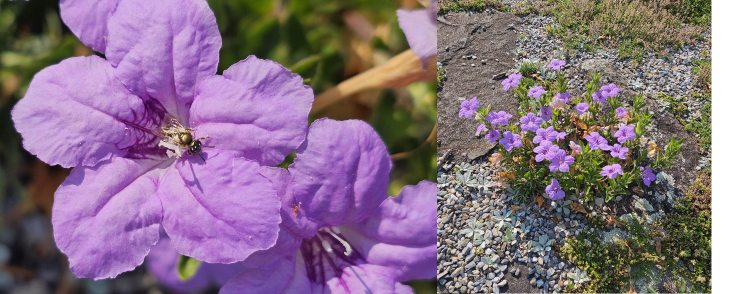
Ruellia humilis is our native wild petunia which ranges from Michigan to Texas, Pennsylvania to Florida. It is remarkedly hardy even here in the hills of Connecticut, where low temperatures can dip down to -30° F. In the wild it grows at the edge of woodlands. It’s been self sowing here in my gravel garden for many years, popping up in the pathways and alongside stonework. A really good do-er, it begins blooming here in June, reaches a peak by July flowering well into September. My first plant came over 30 years ago from Norman Singer, who told me to tuck it in anyplace. Over the years I have found it appreciates sun and good drainage and dislikes wet spots.
In the rock garden, Dianthus haematacalyx pindicola, comes into bloom just after the many of Caryophyllaceae kin are fading. As the other pinks start to finish in late June, this species rises above them with a lovely eye-catching display. It thrives in the raised crevice bed, but is also amenable to the gravel garden.
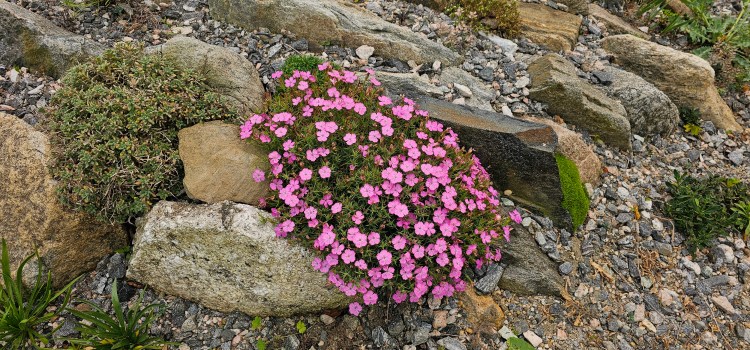
Native to the Balkans it has been in flower throughout July. And I expect it continue for quite a while. It’s hard to beat that kind of performance- just give it lots of sun and plenty of room to show itself off.
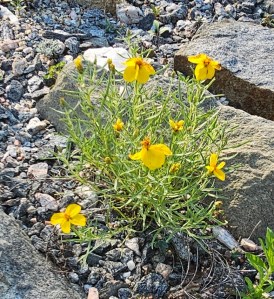
Nearby, one of my favorite rock garden plants Zinnia grandiflora is beginning to open its buds. It isn’t a local native, rather, it hails from the arid southwestern US and Mexico. I knew it first as “Rocky Mountain zinnia”. It is perfectly adapted for heat, sun and drought. Although it is just beginning to bloom now, I expect to see it grow to a 6-8 inch flowering bun by the end of the season. In the west its growth is much more expansive. So far I have only grown it in the crevice garden with crushed gravel between stones. Eventually I may try it in the gravel garden.
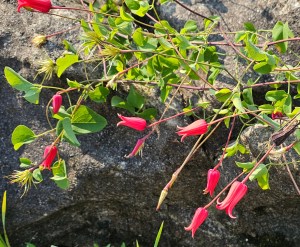
Scrambling over an adjacent big rock, Clematis texensis, looks right at home in the gravel garden. As name suggests, this native species comes from Texas! Specifically it hails from the edge of the Texas Hill Country, in the southeastern Edwards Plateau. If you happen to be in San Antonio and want to see it in situ, you will find it growing in the region’s rugged limestone terrain. The good news for northern gardeners is that it is perfectly hardy here in the Connecticut hills. Like many plants that thrive in my gavel garden it relishes full sun, excellent drainage and plenty of summer heat.


Such little crevices give voice to life that blooms and speak of hope and color in a world permeated with sadness and self-interest.
Thank you for the uplifting spirits of plants.
LikeLike